
Quick Summary
A wifi door sensor provides essential garage monitoring for Cape Coral properties, yet local humidity and salt air often cause hardware corrosion or alignment issues that trigger false alerts. First Choice Garage Door Repair Cape Coral specializes in installing and calibrating smart systems like Chamberlain myQ and Meross to ensure these sensors function reliably despite the harsh coastal environment. Homeowners and property managers can contact First Choice Garage Door Repair Cape Coral for a free, no-obligation estimate on professional wifi door sensor installation or same-day troubleshooting to enhance their security.
WiFi Door Sensor – Reliable Garage Monitoring in Coastal Florida
A wifi door sensor lets you check whether your garage door is open or closed from your phone. For Cape Coral homeowners, though, the real question is not just convenience, it is whether the sensor still gives you an accurate reading after a week of heat, humidity, salt air, and a door that has drifted slightly out of alignment. These sensors monitor door position and send status updates to an app. They are different from photoelectric safety sensors, which sit near the floor and stop the door from closing on a person or object.
If you have ever wondered whether the garage was left open after a late delivery, or why your app keeps sending alerts when the door is already shut, you are not the only one. First Choice Garage Door Repair Cape Coral helps homeowners and property managers choose, install, and troubleshoot smart garage monitoring systems that make sense for local conditions. We work with corrosion-resistant hardware and major smart brands, and when a sensor issue is tied to a bigger garage door problem, we offer fast local service, including 24/7 emergency dispatch for urgent commercial repairs. Below, we cover how a wifi door sensor works, what affects reliability in coastal Florida, and when it is smarter to call for same-day help.[5]
What a WiFi Door Sensor Does for Your Garage – and What It Costs
A wifi door sensor is a small wireless device that tells you whether the garage door is open or closed. It is part of the wider wireless door and window sensor market, which is growing as more homes and businesses adopt connected security devices and IoT products. In practical terms, the sensor sends a signal to your phone through a companion app, so you can check the door status without walking outside.[2]
Most garage monitoring sensors cost about $30 to $80 for the hardware. Basic open and close alerts are often included, while some platforms charge extra for add-ons such as video storage or professional monitoring. In Cape Coral, price matters, but so does placement. A sensor that is mounted poorly on a garage door that already sags or sits out of square can create more frustration than peace of mind.
- These devices send real-time alerts to your garage door app or smart home platform.
- Systems such as Chamberlain myQ and Meross can provide basic status alerts without a monthly fee, depending on the model and features you use.
- In humid coastal areas, proper mounting and corrosion-resistant hardware can help reduce false alerts and early wear.
For homeowners who want the setup done correctly the first time, professional installation can save time and prevent avoidable errors. It is especially helpful when the garage door already has alignment issues or the WiFi signal is weak near the opener.
How Does a WiFi Door Sensor Work on a Garage Door?
A wifi door sensor works by detecting whether the garage door is open, closed, or moving. Most systems use either a magnetic reed switch or a tilt sensor. When the door changes position, the sensor sends that update to a WiFi hub or smart controller, and the app on your phone shows the new status. Some systems also send push notifications, so you can get a garage door open alert on your phone right away.
These monitoring devices are not the same as the safety sensors mounted near the bottom of the door track. Safety sensors are there to stop the door from closing on something in the way. A wifi door sensor is about awareness, not obstruction detection.
Reed Switch vs. Tilt Sensor – Which Type Fits Your Setup
If your garage door does not close evenly, bounces at the bottom, or leaves a small gap on one side, fix the mechanical issue first. Even a good smart home garage door opener can give false readings if the door is already misaligned.
| Sensor Type | Mechanism | Coastal Florida Reality |
|---|---|---|
| Magnetic Reed Switch | Uses two parts that must stay aligned. | Very accurate, but more sensitive to doors that shift, swell, or come out of square. |
| Tilt Sensor | Detects door position by movement and angle. | Usually more forgiving, though heat and battery wear can still affect long-term performance. |
Connecting a Garage Door Sensor to Your Phone Step by Step
Most homeowners can connect a garage door sensor to a phone in about 15 to 30 minutes if the opener is already in good shape. The process is usually simple, but signal strength and mounting location matter more than people expect, especially in homes with stucco walls, metal doors, and detached garages.
- Download the app: Install the app for your Chamberlain myQ smart garage control, Meross garage door opener, or other compatible system.
- Check the WiFi signal: Test the connection at the garage before mounting anything. Thick walls and distance from the router can weaken the signal.
- Mount the sensor securely: Use the hardware recommended by the manufacturer. In coastal Florida, loose tape or weak adhesive often fails too soon.
- Pair and test: Complete the app setup, then run a full open and close cycle to confirm that alerts match the actual door position.
For many Cape Coral homes, the best results come from pairing the sensor with a door that already moves smoothly and closes flush. If the hardware is worn, the sensor can only report the problem, not solve it.
Why WiFi Door Sensors Fail in Cape Coral – and How to Prevent It
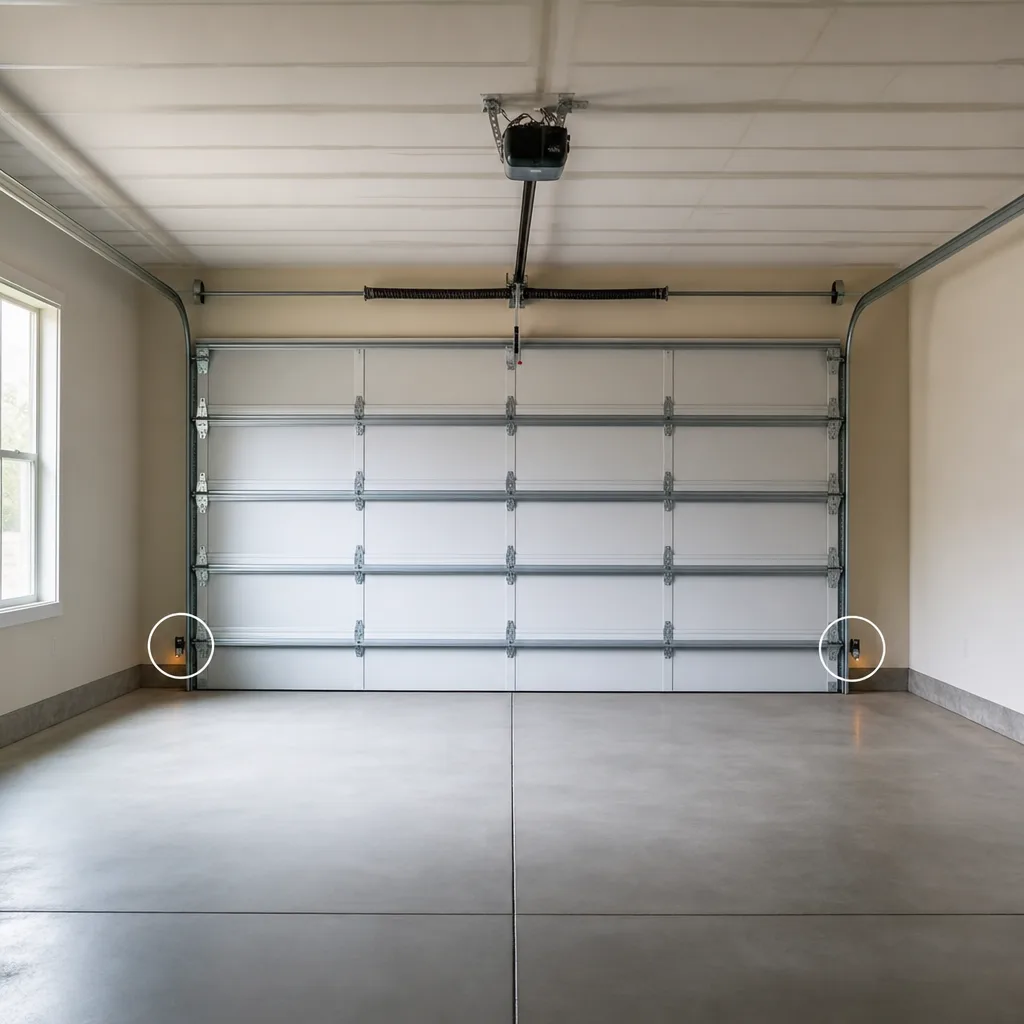
WiFi door sensors fail in Cape Coral for a few predictable reasons: humidity, battery drain, weak WiFi signals, and garage doors that are no longer perfectly aligned. Salt air also speeds up corrosion on exposed hardware, especially when the door is close to the water or the home has not had regular maintenance. A sensor can be perfectly fine on paper and still act unreliable if the garage door itself is shifting with age or storm damage.
Humidity, Battery Life, and Signal Challenges in Coastal Environments
Battery life is one of the biggest complaints with smart door sensor setups. In a dry climate, a sensor may work for a long stretch without much attention. In Cape Coral, heat and moisture can shorten battery life and make the device feel less dependable. That does not mean the product is bad. It usually means the installation conditions are tougher than the average product page suggests.
WiFi signal is another issue. Many local homes use stucco exteriors, metal garage doors, or detached garages, all of which can weaken the connection between the sensor, the hub, and the router. If the app keeps dropping updates, the problem may not be the sensor at all. It could be the signal path.
Position also matters. Mounting the wifi door sensor on a panel that flexes too much, gets direct heat, or sits too close to corroded hardware can lead to inconsistent readings. A careful installation makes a bigger difference than many people expect.
False Alerts from Storm-Damaged or Misaligned Garage Doors
After a tropical storm or hurricane season, it is common for garage doors in Southwest Florida to sit slightly out of square. Even small changes in track alignment, rollers, or panel shape can confuse a magnetic sensor and trigger false alerts. If the door is rubbing, sticking, or not sealing evenly, no smart home security system will fix that on its own.[4]
This is where a lot of homeowners get frustrated. They buy a wifi garage door opener accessory expecting a quick fix, then spend days trying to figure out why the app keeps saying the door is open. In many cases, the door needs mechanical repair before the sensor can work properly.
| Sensor Type | Accuracy | Coastal Performance |
|---|---|---|
| Magnetic Reed Switch | Very accurate when the door and mounting points stay aligned. | Can be sensitive to shifting doors, corrosion, and moisture-related wear. |
| Tilt Sensor | Usually a little more forgiving if the door is not perfectly square. | Often performs better in humid conditions, depending on the model and battery quality. |
WiFi Signal Drops – Metal Doors, Stucco Walls, and Router Distance
Wireless garage monitoring depends on a stable signal. If your router is far from the garage, or if the signal has to pass through concrete block, stucco, or metal, the app may lag or miss updates. That is why some homeowners add a WiFi extender or move the hub closer to the garage.
To reduce signal problems:
- Test the signal at the exact spot where the sensor will be mounted.
- Keep the hub away from metal tracks, motors, and other sources of interference.
- Use a WiFi extender if the garage is detached or the router is on the opposite side of the house.
Best WiFi Door Sensor Options for a Garage Door – No Subscription Required
For most homeowners, the best wifi door sensor is the one that matches the opener you already have and gives reliable alerts without extra monthly costs. Chamberlain myQ and Meross are two of the better-known options in this category. Both can work well for basic open and close monitoring, and many users like them because they fit into a broader smart home garage door opener setup.
Do wifi door sensors require a monthly subscription? Usually, no, not for basic alerts. Some platforms charge for premium features, such as video storage or professional monitoring, but simple door status updates are often free. If you only need a garage door app that tells you whether the door is open or closed, a subscription may not be necessary.
North America and Europe currently hold a strong share of the wireless door and window sensor market, while Asia-Pacific is expected to grow quickly as urbanization and disposable income rise. In the smart home security market, North America held a 36.6% revenue share in 2025, supported by connected home adoption and continued growth in AI and IoT-enabled devices. Those trends help explain why more people are looking for a wifi door sensor, but the local fit still matters more than the marketing.[1]
When comparing options, start with compatibility. Chamberlain myQ works best with Chamberlain and LiftMaster systems. Meross is often a good fit for homeowners who want broader compatibility and Apple HomeKit support without recurring fees. If your garage door already has alignment issues, choose the setup that is easiest to calibrate and support.
| Feature | Chamberlain myQ | Meross Smart Opener | Standalone Sensor |
|---|---|---|---|
| Monthly Fees | Usually only for optional premium features | None for core alerts | None |
| HomeKit Support | ✗ | ✓ | Varies |
| Coastal Reliability | Good when installed and aligned correctly | Good when WiFi and mounting are solid | Depends heavily on installation quality |
When to Call a Pro for WiFi Sensor Installation or Troubleshooting
Call a professional if your garage door hesitates, reverses, sticks, or does not close flush. A wifi door sensor can tell you the door’s status, but it cannot correct a bent track, worn rollers, a weak spring, or storm damage. If the door itself is not working right, the app will only keep reminding you that something is wrong.
You should also call for help if you are dealing with repeated false alerts, poor signal strength, or a sensor that will not stay paired with your phone. In those cases, the issue may be a mix of mechanical wear and setup problems.
Signs Your Garage Door Needs Mechanical Repair Before Sensor Setup
If you hear grinding, see uneven movement, or notice that the door sits slightly crooked, address the repair first. Coastal wear can push a door out of square faster than many homeowners expect. Installing a Chamberlain myQ smart garage control or Meross smart garage door opener on top of that problem usually just creates more notifications, not more security.
What a Professional Calibration Visit Includes
First Choice Garage Door Repair Cape Coral offers same-day scheduling and owner-operated service, which is helpful when you need the garage working again without waiting around for a long franchise window. A typical installation or calibration visit includes:
- Checking the mechanical condition of the door.
- Testing WiFi strength at the mounting location.
- Installing corrosion-resistant hardware where needed.
- Pairing the sensor and confirming live alerts on your phone.
If you want a free, no-obligation estimate for wifi door sensor installation or troubleshooting, we can help. For urgent security issues, we also provide 24/7 emergency dispatch with a 30 to 60 minute response window.[3]
WiFi Door Sensor FAQ for Cape Coral Homeowners
A wifi door sensor is useful, but only when the door, the signal, and the app are all working together. In Cape Coral, that means paying attention to humidity, salt air, battery life, and whether the garage door is still square. The answers below cover the questions we hear most often from homeowners and property managers.
How does a wifi door sensor work?
It detects whether the garage door is open or closed, then sends that information to a WiFi hub and a phone app. Most models use either a magnetic reed switch or a tilt sensor.
What is the best wifi door sensor for a garage door?
The best option depends on your opener and your needs. Chamberlain myQ is a strong fit for Chamberlain and LiftMaster systems, while Meross is a good choice for homeowners who want broad compatibility and no recurring fee for core alerts.
Do wifi door sensors require a monthly subscription?
Usually not for basic open and close alerts. Some premium features, such as video storage or professional monitoring, may require a paid plan.
Can I install a wifi door sensor on my own?
Yes, many homeowners can handle the installation. Still, if the garage door is already misaligned, or if the WiFi signal is weak, professional installation is often the better choice.
How do I connect a garage door sensor to my phone?
- Download the manufacturer app.
- Connect the hub or opener to your WiFi network.
- Pair the sensor with the app.
- Run a full open and close test to confirm the alerts match the door position.
How fast can I get professional installation?
For Cape Coral homeowners and property managers who want the system installed correctly the first time, First Choice Garage Door Repair Cape Coral offers same-day service and a 30 to 60 minute response window for urgent calls.
Sources
- Automatic Door Industry Statistics | Fact-Checked 2026 – worldmetrics.org (2028)
- Door Sensors Market Report 2030 | Industry Insights and Growth – knowledge-sourcing.com (2030)
- Wireless Door Window Sensor Analysis 2025 and Forecasts 2033: Unveiling Growth Opportunities – archivemarketresearch.com (2033)
- Smart Home Security Market Size And Share Report, 2033 – grandviewresearch.com (2033)
- Smart Home Safety Market Reached Over 34 Billion … – nchstats.com (2030)
Related reading: Myq Homekit | Call Now-10% Off | Same-Day Service | Free Estimate
Frequently Asked Questions
Why does my wifi door sensor keep showing the garage door as open when it is closed?
False alerts usually come from a misaligned door, a sensor mounted on a flexing panel, weak WiFi, or corrosion from Cape Coral humidity and salt air. First Choice Garage Door Repair Cape Coral can inspect the door, recalibrate the sensor, and fix mechanical issues so the app matches the actual door position.
What is the difference between a wifi door sensor and the safety sensors on my garage door?
A wifi door sensor only reports whether the garage door is open or closed and sends that status to your phone. Safety sensors are the floor-level photoelectric devices that prevent the door from closing on people or objects, so they serve a completely different function.
Do I need professional installation for a wifi door sensor in Cape Coral?
If your garage door is already square, the WiFi signal is strong, and the opener is compatible, many homeowners can install one themselves. But in coastal Florida, professional installation from First Choice Garage Door Repair Cape Coral is often the better choice when you have weak signal, detached garages, or alignment problems that can cause unreliable alerts.
About the author
 |
Marcus Thorne Marcus Thorne brings over a decade of experience in access control systems and home automation to his writing on smart garage door openers and new door installations. With a background in electrical engineering from the University of Central Florida, he focuses on clear, practical advice for property owners looking to upgrade their home’s security and convenience. His work emphasizes safety, technical accuracy, and helping readers make informed decisions about their garage door investments. |