
Quick Summary
While installing a new doorknob is a quick and effective DIY project to boost your home's entry door security, focusing solely on standard entryways leaves a dangerous gap at your home's largest and most vulnerable entry point: the garage. Securing this critical perimeter requires heavy-duty, fire-rated hardware on the garage-to-home door and a fully functional, well-maintained overhead garage door system to prevent intruders from gaining easy access. Readers will understand how to properly measure and replace standard locksets and can contact First Choice Garage Door Repair Cape Coral for a free estimate on a professional garage door security tune-up or smart opener installation.
Installing a New Doorknob – Boost Your Home Security in 10-45 Minutes
Swapping out an old, worn lockset is one of the quickest ways to improve your home’s security and curb appeal. If you are installing a new doorknob, the job is highly manageable. An experienced DIYer can usually replace an interior door knob in about 10 to 15 minutes, while a first-timer should budget roughly 20 to 30 minutes. If you are starting fresh with a blank, undrilled door, expect the job to take up to an hour since you will need to drill out the core and mortise the latch plate.[1]
For homeowners in Cape Coral and surrounding areas like McGregor, Whiskey Creek, and North Fort Myers, salt-laden coastal air makes hardware maintenance a constant priority. Cheap metal components oxidize quickly in our humid climate, leading to sticky latches and failed locks. While a basic passage knob can cost as little as $15, high-quality, weather-resistant exterior locks and Wi-Fi enabled smart locks can exceed $250. If you prefer to hire a professional, standard installation labor typically runs between $69 and $246, though rates in dense urban areas can increase by 15% to 25% due to higher living costs. Labor costs vary by region and complexity, with basic swaps averaging $40-$65 per knob, while premium or multi-door jobs can reach $246+.[2]
The global door handle market is massive. The global door handle market is projected to reach USD 11,214.27 million in 2026 and is projected to reach USD 15,738.86 million by 2035. This massive investment makes sense: your doors are your first line of defense. However, standard DIY guides often leave a dangerous gap in your security plan by focusing solely on front doors while ignoring the high-risk entry point connecting your garage to your living space.
Doorknob Upgrades: Cost, Speed, and Hardware Options
Before heading to the hardware store, it helps to understand what you are paying for and how long the installation will take. The table below breaks down the most common options for residential doors.
| Lock Type | Average Hardware Cost | Installation Time (DIY) | Best Application |
|---|---|---|---|
| Passage / Privacy Knob | $15 – $40 | 15 – 20 minutes | Bedrooms, bathrooms, and closets |
| Keyed Entry Lockset | $30 – $80 | 20 – 30 minutes | Back doors, side doors, and standard entryways |
| Smart Wi-Fi Lock | $150 – $250+ | 30 – 45 minutes | Front entry doors and rental properties |
| Fire-Rated Self-Closing Lock | $50 – $120 | 30 – 40 minutes | Garage-to-house entry doors (meets local building codes) |
While a high-quality smart lock on your front door looks great, it only protects that specific entrance. True home security requires looking at your property as a whole, starting with the heavy garage door that shields your vehicles and tools.
What Tools Are Needed to Replace a Doorknob?
Need installing a new doorknob?
We’re available now — call for a fast, free estimate.
To get started, you only need a few basic tools that are likely already in your garage:
- A Phillips-head screwdriver (manual is preferred to avoid stripping screws)
- A flat-head screwdriver (for releasing old spring clips)
- A tape measure
- A wood chisel and hammer (if you need to mortise a deeper recess for the latch plate)
- A specialized door knob installation kit (only required if you are drilling holes in a brand-new, blank door)
Before you purchase any replacement hardware, you must know how to measure your door correctly. This prevents frustrating trips back to the home improvement store.
How Do You Measure a Door for a New Doorknob?
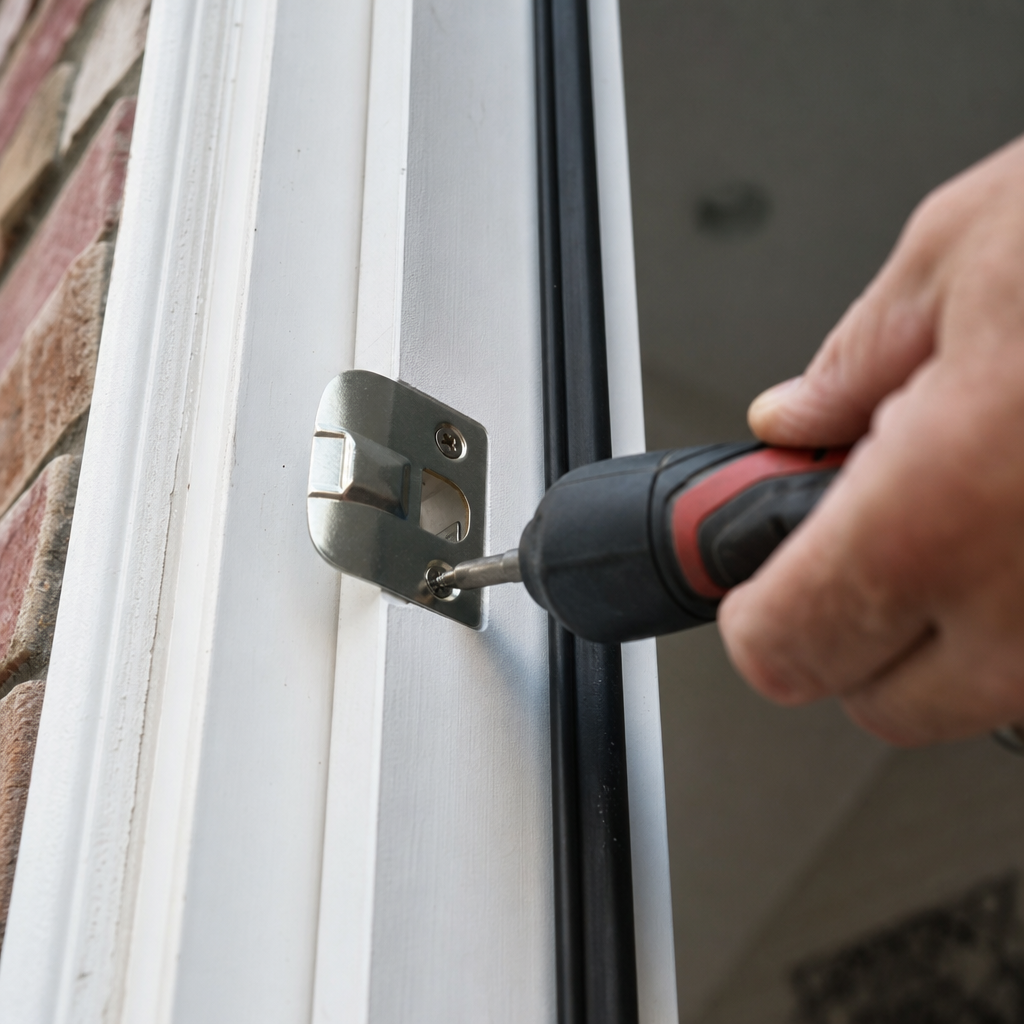
To ensure your new hardware fits perfectly without requiring you to drill new holes, take three key measurements:
- The Backset: This is the distance from the flat edge of the door to the exact center of the main bore hole. In the United States, standard backsets are either 2-3/8 inches or 2-3/4 inches. Most modern locksets feature an adjustable latch that can adapt to either size, but it is always best to double-check.
- The Bore Hole Diameter: Measure the circular opening in the door. The standard modern size is 2-1/8 inches. Older homes built before 1970 often have smaller bore holes (usually 1-1/2 inches), which require widening before you can install a modern doorknob.
- Door Thickness: Standard interior doors are usually 1-3/8 inches thick, while exterior doors are typically 1-3/4 inches thick. Ensure your new hardware kit is rated for your specific door thickness.
Note that even pre-drilled doors may need backset or bore hole adjustments, which can extend installation time and cost.[3]
If you are planning a garage entry door lock replacement, these measurements are especially important. This door serves as a barrier against both intruders and hazardous fumes, requiring an airtight fit.
How Do You Install a Doorknob Step-by-Step?
Need installing a new doorknob?
We’re available now — call for a fast, free estimate.
Once you have your tools ready and your new hardware matches your door’s measurements, follow these straightforward steps to complete the installation.
Step 1: Remove the Old Doorknob
To begin, you need to know how to remove a doorknob safely without damaging the door face. First, look at the interior collar (the rose plate) of your existing knob. If you see exposed screws, simply back them out using your Phillips-head screwdriver and pull the two halves of the handle apart.
If there are no visible screws, your lockset uses hidden mounting plates. Look closely at the neck of the inside knob for a tiny slot or pinhole. Insert a small paperclip, nail, or specialty tool into this hole to depress the catch (the detent) and slide the handle off the spindle. You can then pry off the decorative rose cover plate with a flat-head screwdriver to reveal the hidden mounting screws underneath. Once these are removed, slide the latch assembly out of the edge of the door.
Step 2: Install the New Latch and Strike Plate
Slide the new latch mechanism into the opening on the edge of the door. The angled slope of the latch bolt must face the door frame so that it retracts smoothly when the door swings closed. If the bevel faces the wrong way, the door will not latch shut when pushed.
Secure the latch plate to the door edge using the provided wood screws. If the new plate is slightly larger than the old recess, use a sharp wood chisel and a hammer to gently shave away small amounts of wood until the plate sits completely flush with the edge of the door. Next, unscrew the old strike plate on the door frame and install the new one included in your kit.
Step 3: Secure the New Doorknob and Lock Cylinder
If you are learning how to install a doorknob with a lock, pay close attention to the cylinder orientation. The keyed side must go on the outside of the door, with the keyhole facing downward in the correct position.
Align the spindle (the metal bar extending from the exterior handle) and pass it directly through the square slot in the center of the latch mechanism. Guide the interior half of the doorknob onto the spindle from the other side, lining up the screw holes with the threaded posts inside the exterior handle. Thread the mounting screws by hand first to prevent cross-threading, then tighten them securely with a manual screwdriver. Avoid using an electric drill, as it is easy to over-tighten the screws and warp the internal housing.[4]
Step 4: Test the Mechanism and Adjust
With the door open, turn the handle several times to ensure it retracts and extends fully without sticking. Next, close the door to verify that the latch clicks securely into the strike plate on the door frame.
Why is my new doorknob not turning or sticking? If the knob is hard to turn or the latch sticks inside the door, the mounting screws are likely too tight, or the latch mechanism is slightly misaligned with the handle spindle. To fix this, loosen the mounting screws by one or two turns, wiggle the handles slightly to let them self-center, and then snug the screws back down. If the door closes but does not lock shut, your strike plate on the door frame is likely sitting too high, too low, or too deep. Adjust the strike plate position slightly until the latch falls perfectly into the center opening.
The Garage-to-Home Security Gap: Why Standard DIY Guides Put Your Home at Risk
While learning how to replace entry door knob hardware is simple, standard online tutorials ignore a massive safety hazard: the door connecting your garage to your living space. This door is not a typical interior door. It serves as a vital fire barrier and a seal against deadly carbon monoxide fumes from your vehicles.
According to local building codes in some regions, including Southwest Florida, the door leading from an attached garage into a residence must be a solid-wood door, a honeycombed-core steel door, or a 20-minute fire-rated door. Furthermore, this door must be equipped with an automatic self-closing device.
If you install a basic residential passage knob on this door, you bypass these critical safety requirements. A standard doorknob does not provide the tension needed to keep a heavy, self-closing fire door tightly sealed against its weatherstripping. If a fire breaks out in your garage or a vehicle is left running, toxic fumes can easily seep around the door and enter your family’s living areas. When performing a garage entry door lock replacement, you should always use heavy-duty, commercial-grade hardware designed to withstand constant spring tension and keep the fire seal closed tight.
The Real Shield: Securing Your Garage Door
A high-security lock on your garage entry door is only as good as the garage door itself. If your garage door is outdated, damaged, or has rusted tracks due to the salty Cape Coral climate, intruders can easily bypass it to gain access to your tools, vehicles, and the interior door of your home.
In neighborhoods like Lochmoor Waterway Estates and Pine Manor, high winds and humidity degrade garage door rollers, springs, and tracks over time. A sagging or misaligned garage door can leave gaps at the bottom, making it easy for pests, water, and intruders to get inside.
While replacing exterior door knob hardware is an excellent weekend DIY project, servicing high-tension garage door springs and heavy overhead tracks is dangerous work. Garage door springs hold extreme mechanical tension; attempting to adjust or replace them without specialized training and professional tools can result in severe physical injury or major property damage.
Need installing a new doorknob?
We’re available now — call for a fast, free estimate.
Sources
- Average hourly wages for blue collar occupations across … – bls.gov (2023)
- Door Hardware Installation Cost Guide 2026 – new.risingsunartscentre.org (2026)
- Door Knob Installation Costs and Prices 2026 – Digital Database – new.risingsunartscentre.org (2026)
- Door Handles Market Size, Share And Growth Report, 2030 – grandviewresearch.com (2030)
Related reading: Install New Deadbolt – Call Now-10% Off – Same-Day Service – Free Estimate
Related reading: Cost of Exterior Door Replacement Without Surprise Fees
Related reading: Cost to Install New Exterior Door Without Surprise Fees
Frequently Asked Questions
How do I safely widen a 1-1/2-inch bore hole in an older door to fit a modern 2-1/8-inch doorknob?
To widen an existing bore hole without the drill bit slipping, clamp a scrap piece of wood over the hole to act as a guide, or use a specialized door lock installation template. This provides a solid centering point for your 2-1/8-inch hole saw to cut cleanly through the door without damaging the wood.
What specific hardware is required to make a garage-to-home entry door fully compliant with local fire safety codes?
To meet fire safety standards, this entryway requires a solid-core or fire-rated door equipped with self-closing hinges or an automatic door closer. Additionally, you should install a heavy-duty, fire-rated keyed lock or deadbolt that can withstand high temperatures and maintain a tight seal against toxic fumes.
How can I tell if my overhead garage door has alignment issues or gaps that compromise my home security?
Inspect the bottom of your closed garage door from the inside; if you see light filtering through, the bottom seal is worn or the tracks are misaligned. Because adjusting high-tension springs and tracks is highly dangerous for DIYers, you should contact First Choice Garage Door Repair Cape Coral to safely realign your system and restore maximum perimeter security.
About the author
 |
Marcus Thorne Marcus Thorne brings over a decade of experience in access control systems and home automation to his writing on smart garage door openers and new door installations. With a background in electrical engineering from the University of Central Florida, he focuses on clear, practical advice for property owners looking to upgrade their home’s security and convenience. His work emphasizes safety, technical accuracy, and helping readers make informed decisions about their garage door investments. |