
Quick Summary
Uninsulated steel doors transfer intense solar heat into attached living spaces while lacking the panel rigidity needed for demanding coastal environments. Upgrading to an injected polyurethane garage door maximizes thermal resistance and impact durability, with First Choice Garage Door Repair Cape Coral ensuring correct spring calibration and storm-ready wind-load engineering. Homeowners will gain the insights needed to compare insulation materials and choose a certified, high-efficiency door system tailored to warm climates.
Polyurethane Garage Door: Managing Heat and Storm Considerations
A polyurethane garage door can be a practical upgrade for homeowners looking to reduce heat transfer into attached spaces while adding panel rigidity. An uninsulated metal garage door can absorb direct sun and transfer heat into adjacent rooms. Choosing a 3-layer steel polyurethane garage door can help manage heat transfer, reduce transmitted noise, and increase panel stiffness.
Polyurethane is generally denser and closed-cell, creating a composite panel that can resist denting and reduce vibration during operation. See also Insulated Garage Doors | Call Now-10% Off | Same-Day Service | Free Estimate.
What Is a Polyurethane Garage Door and How Does It Perform?
Quick Summary: A polyurethane garage door uses high-density, closed-cell foam injected under pressure between steel skins. As the foam expands and cures, it bonds to the metal to create a composite sandwich structure. The actual completed door R-value varies by foam thickness, panel construction, joint design, and testing method, so homeowners should consult the manufacturer-tested assembly rating for specific performance metrics.
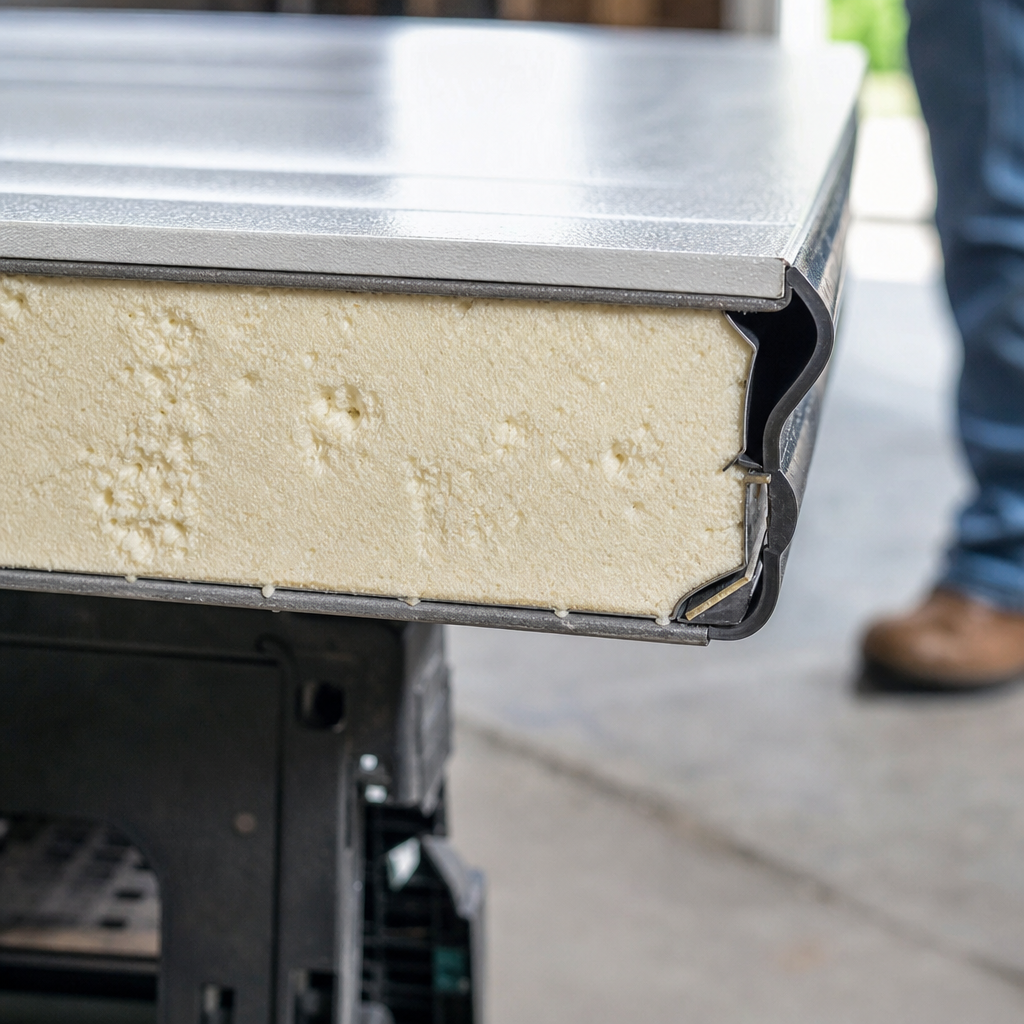
Unlike single-layer steel doors or panels with unbonded foam inserts, an injected polyurethane garage door creates a rigid composite panel where the foam core fills the space between the front and back steel sheets to help reduce thermal bridging.
Injected Foam Core Technology
In manufacturing, liquid polyurethane foam is injected between steel skins, bonding directly to the metal as it expands. As a material benchmark, rigid closed-cell polyurethane provides approximately R-6.5 per inch, which generally offers greater thermal resistance per inch than polystyrene materials. Because the foam adheres directly to the steel skins, the resulting panel gains structural stiffness and resists flexing.[3]
Key Performance Metrics at a Glance
- Thermal Resistance: Offers higher material thermal resistance per inch than polystyrene, helping to slow heat conduction through the door panels when combined with proper air sealing.
- Composite Panel Strength: Bonded foam supports the steel faces, helping to reduce panel deflection and minor denting.
- Noise Reduction: Dense closed-cell foam dampens panel vibration and helps reduce sound transmission, though tracks, seals, hardware, windows, and perimeter gaps can still transmit sound.
- Air Infiltration Control: Many insulated door systems feature joint seals and perimeter weatherstripping to help reduce air leakage around the opening.
According to specialists like First Choice Garage Door Repair Cape Coral, when evaluating an insulated garage door, review the manufacturer-tested assembly rating and complete door system, including weatherstripping, joint construction, and hardware, rather than relying solely on the raw insulation material rating.
Polyurethane vs. Polystyrene Garage Doors: How to Choose
The difference between a polyurethane vs polystyrene garage door comes down to material density, core bonding, and thermal resistance per inch. Polystyrene doors typically use pre-cut rigid foam panels fitted inside the panel, whereas polyurethane doors feature foam injected directly between the steel sheets to create a bonded composite core.[4]
Thermal Resistance and R-Value Comparison
Polystyrene inserts may leave small air spaces inside the panel assembly, whereas injected polyurethane forms a continuous core that minimizes internal air voids. While rigid polyurethane provides a material benchmark of approximately R-6.5 per inch, actual door R-values depend on foam thickness, panel construction, joints, and testing methods, meaning complete door assembly performance varies across models.[1]
| Feature | Non-Insulated Steel (1-Layer) | Polystyrene Inserts (2 or 3-Layer) | Injected Polyurethane (3-Layer) |
|---|---|---|---|
| Material Benchmark | Minimal thermal barrier | Lower thermal resistance per inch | Approximately R-6.5 per inch material benchmark |
| Core Bonding | None (Hollow steel shell) | Fitted or glued foam sheets | Injected, bonded closed-cell core |
| Panel Rigidity | Flexible; prone to denting and rattling | Moderate panel stiffness | Enhanced panel stiffness; reduced panel flex |
| Acoustic Behavior | Transmits sound and panel vibration | Moderate noise dampening | Provides noise reduction; dampens panel vibration |
| Wind-Load Role | Requires complete engineered reinforcement system | Requires complete engineered reinforcement system | May improve panel stiffness; requires engineered assembly for code compliance |
Structural Density and Panel Rigidity
Because the injected foam adheres to the steel faces, a 3-layer steel polyurethane garage door tends to operate with less panel rattle than hollow steel doors. The composite structure provides added resistance against everyday minor impacts, helping to keep the steel skins from flexing or creasing as easily under normal use.
Why Injected Polyurethane Garage Doors Matter for Coastal and Warm Climates
Need polyurethane garage door?
We’re available now — call for a fast, free estimate.
In warm climates, garage doors are exposed to significant solar exposure and, in some regions, high wind conditions.
Heat and Solar Thermal Considerations
When exposed to strong sunlight, an uninsulated garage door can absorb and transfer heat into the garage interior, which may affect adjacent or overhead living spaces. Adding insulation and effective air sealing can reduce heat transfer into the garage, though overall temperature changes and energy impacts will depend on local climate, sun exposure, garage usage, and the performance of the complete door system.
High-Wind and Structural Reinforcement
While the bonded core of a polyurethane door may improve panel stiffness, hurricane resistance requires a certified, engineered door assembly. Proper wind-load performance depends on heavy-duty tracks, structural jamb attachment, reinforced hinges, rollers, horizontal bracing, and proper installation in compliance with local building codes.
Polyurethane Garage Door Considerations and Installation Specs
Upgrading to an insulated sectional door requires matching the door to compatible mechanical components. Because an insulated composite panel can add weight, the counterbalance system and supporting hardware must be properly configured.
Mechanical Hardware and Spring Calibration
An insulated polyurethane door often weighs more than an uninsulated single-layer door. Counterbalance systems, including torsion springs, must be calibrated to match the specific weight of the door assembly. As noted by First Choice Garage Door Repair Cape Coral, mounting tracks and hardware should be securely fastened to structural framing to ensure proper operation.
Investment and Code Compliance
A polyurethane garage door generally requires a higher initial investment than a basic uninsulated door. In areas subject to high-wind building codes, always verify that the complete door assembly has been tested and certified to meet the specific local wind-load requirements before installation.[2]
Frequently Asked Questions About Polyurethane Garage Doors
What is the difference between polyurethane and polystyrene garage doors?
Polystyrene doors typically use pre-cut rigid foam inserts fitted inside the door panel. Polyurethane doors use closed-cell foam injected directly between the steel skins, bonding the panel faces. Polyurethane provides approximately R-6.5 per inch as a material benchmark, which offers greater thermal resistance per inch than polystyrene and provides enhanced panel stiffness.
What R-value does a polyurethane insulated garage door provide?
Actual door R-value varies by foam thickness, panel construction, joint design, and testing method. To determine thermal performance, review the manufacturer-tested assembly rating for the specific door model.
Are polyurethane garage doors worth the extra cost in warm climates?
Whether a polyurethane door is worth the added cost depends on several factors, including whether the garage is attached, air-conditioned, or used as a workspace. Overall benefits depend on local climate, solar exposure, proper air sealing, installation quality, and the total purchase price.
How does polyurethane insulation improve garage door durability and noise reduction?
The dense, bonded foam core supports the steel skins, helping panels resist denting and surface flex. This composite construction also dampens panel vibration and provides noise reduction, though hardware, tracks, seals, windows, and perimeter gaps can still transmit sound.
Can polyurethane insulated garage doors withstand hurricane winds?
Polyurethane foam may improve panel stiffness, but hurricane and storm resistance requires a certified, engineered door assembly. The door system must include appropriate tracks, reinforcement struts, heavy-duty hardware, proper installation, and compliance with local building codes.
How should a polyurethane garage door be maintained?
Technicians at First Choice Garage Door Repair Cape Coral advise that maintaining an insulated garage door involves inspecting and lubricating moving hardware, checking spring balance, and maintaining perimeter and bottom weather seals to support reliable operation over the life of the door.
Need polyurethane garage door?
We’re available now — call for a fast, free estimate.
Sources
- Building with Exterior Rigid Foam – phrc.psu.edu
- First Revision No. 1-NFPA 275-2025 [ Section No. 2.3. … – docinfofiles.nfpa.org (2025)
- An In-Depth Guide to 1 In Insulation Board: Standards, Grades, and Performance – telectronichub.com
- Rigid Foam Insulation: Technical Guide to EPS, XPS, and Polyiso Boards for Exterior Sheathing, Foundation, and Continuous Insulation Applications – build-construct.com
Related reading: Cost to Install Garage Door | 10% Off & Free Estimate | Same-Day Service
Related reading: Garage Door Installation Cost – Call Now-10% Off – Same-Day Service – Free Estimate
Related reading: Garage Door Repair Cost | 10% Off & Free Estimate | On-Site in 60 Minutes
Frequently Asked Questions
Do I need to replace my opener and springs when upgrading to a heavier polyurethane garage door?
Because injected 3-layer polyurethane panels add structural weight, your counterbalance torsion springs must be precisely recalibrated or replaced to handle the load. First Choice Garage Door Repair Cape Coral inspects your current opener and hardware to ensure your complete mechanical system operates safely and efficiently.
How do I make sure a new polyurethane garage door meets local hurricane building codes?
Storm resistance requires a fully engineered wind-load assembly that includes reinforced tracks, structural jamb attachments, and heavy-duty struts. First Choice Garage Door Repair Cape Coral ensures that your new polyurethane door system is fully tested, certified, and permitted to meet stringent Southwest Florida wind codes.
How can I schedule a consultation and estimate for a polyurethane door installation?
Homeowners can arrange an on-site assessment to measure openings, evaluate thermal R-value requirements, and discuss wind-load specifications. First Choice Garage Door Repair Cape Coral offers free estimates to help you choose the ideal high-efficiency polyurethane door for your property.
About the author
 |
David Mitchell David Mitchell is a seasoned home maintenance expert with over 15 years of experience in the garage door industry. Holding a degree in Mechanical Engineering from Florida Gulf Coast University, he specializes in writing about safety, mechanical troubleshooting, and emergency repair solutions for residential and commercial properties. David is passionate about helping Cape Coral residents secure their homes through reliable maintenance advice and clear, actionable insights. |