
Quick Summary
Selecting the right garage door materials in Southwest Florida requires balancing aesthetic appeal with structural survival against intense humidity, salt-laden air, and hurricane-force winds. As a premier local installer, First Choice Garage Door Repair Cape Coral recommends multi-layer insulated galvanized steel with rust-resistant coatings or marine-grade aluminum-glass hybrids to ensure long-term durability and wind-load compliance. Property owners can contact First Choice Garage Door Repair Cape Coral for a free, no-obligation estimate on a custom, climate-tailored garage door installation that protects their home and lowers insurance premiums.
Garage Door Materials – How to Choose the Best Local Option
When selecting the best garage door materials for your home, you need a solution that balances durability, hurricane-rated security, and cost. In Cape Coral and surrounding Southwest Florida communities, a new door typically ranges from $1,200 to over $4,000 depending on the style, material, and wind-load requirements. While steel remains the most common garage door material choice globally due to its strength and low maintenance requirements, our coastal environment demands a closer look at the specifications. Standard off-the-shelf steel doors without proper protective coatings can fail prematurely when exposed to relentless humidity and salt air.[1]
Selecting the right garage door involves understanding how different metals, woods, and synthetics hold up against the unique challenges of our region. From salt-spray corrosion along the Caloosahatchee River to the high-velocity wind demands of hurricane season, your choice of material directly impacts the lifespan of your door and the safety of your home. Working with a local specialist like First Choice Garage Door Repair Cape Coral ensures your investment is engineered to withstand these elements while boosting your home’s curb appeal.
What are the best garage door materials for Southwest Florida homes?
What are the best garage door materials for Southwest Florida homes in brief? The best garage door materials for residential homes are steel, aluminum, wood, fiberglass, and vinyl. For coastal areas like Cape Coral, Florida, multi-layer insulated galvanized steel with a rust-resistant coating and heavy-duty aluminum-glass hybrids are the top choices. These materials offer the ideal balance of wind-load resistance, structural durability, and protection against high humidity and salt air.
Selecting the right garage door materials requires balancing aesthetic appeal with structural survival. The materials commonly used for garage and overhead doors include steel, aluminum, wood, fiberglass, vinyl, and composite materials, and consulting with First Choice Garage Door Repair Cape Coral can help you determine the ideal choice for your home. However, coastal environments demand strict attention to wind-load engineering and corrosion resistance.
The Quick Answer for Coastal Homeowners
For homes in Cape Coral, Lochmoor Waterway Estates, and nearby coastal neighborhoods, the most reliable garage door material is heavy-duty, multi-layer insulated galvanized steel treated with a zinc-protective coating, or a marine-grade aluminum-glass hybrid. While traditional wood offers undeniable beauty, it warps and swells under Southwest Florida’s relentless humidity. Standard, untreated materials degrade quickly here because salt air accelerates rust on non-galvanized hardware, and seasonal storms require certified impact ratings. Choosing materials specifically rated for local wind-load requirements is essential to ensure long-term safety and performance.
Key Takeaways: Choosing Your Material
When comparing different types of garage door materials for your next installation, keep these practical benchmarks in mind:
- Steel Dominance: Steel remains the industrial standard and the most popular residential choice. Its structural strength makes it highly resistant to dents and wind pressure, provided it is manufactured with proper anti-corrosive coatings.
- Modern Aesthetics: Aluminum-glass hybrids are advancing in popularity as buyers seek modern aesthetics and daylighting benefits. They offer excellent natural rust resistance, though they are lighter and softer than steel.
- The Coastal Priority: In Cape Coral, standard material ratings are not enough. The critical factor for steel longevity is not just the core metal but the use of stainless or powder-coated hardware, including hinges, rollers, and springs, to prevent salt-induced oxidation.
How do different types of garage door materials compare?
Need garage door materials?
We’re available now — call for a fast, free estimate.
Comparing the best garage door material options requires balancing strength, thermal performance, and local environmental resilience. While steel remains the dominant market choice, alternative materials like aluminum, natural wood, and modern fiberglass or vinyl offer distinct advantages in weight, rust resistance, and aesthetic appeal. Choosing the right material depends on how well it withstands local weather conditions, maintenance demands, and structural requirements.
| Feature | Insulated Steel | Heavy-Duty Aluminum | Vinyl and Fiberglass |
|---|---|---|---|
| Rust Resistance | Moderate (needs coastal coating) | High | Exceptional |
| Wind-Load Strength | Excellent | Good | Excellent |
| Maintenance Needed | Low | Low | Very Low |
| Insulation (R-Value) | R-12 to R-18 (for polyurethane-filled steel or composite) | Low to Moderate | N/A |
Steel vs Wood Garage Doors: Durability vs Aesthetics
Steel holds the vast majority of the North American garage door market share due to its high structural integrity and low maintenance needs. In contrast, natural wood offers unmatched warmth and high-end curb appeal but demands intensive upkeep in humid, coastal environments. Without annual sanding, staining, and sealing, real wood doors quickly warp, swell, and rot under intense moisture and Southwest Florida sun. This makes multi-layer insulated steel the more durable, worry-free choice for long-term performance.[2]
Aluminum vs Steel Garage Doors: Weight and Rust Resistance
When evaluating an aluminum vs steel garage door, the primary trade-offs are weight and corrosion resistance. Aluminum resists rust but can corrode via salt-induced oxidation; therefore, powder-coated or marine-grade aluminum is recommended only for full-view oceanfront doors, rather than standard garages. It is also lightweight, which reduces wear and tear on your torsion springs and automatic opener. However, aluminum is softer and more prone to denting than steel. For homeowners prioritizing maximum structural strength against high winds, heavy-gauge steel remains the industry standard, provided it features adequate protective coatings.
Local environmental factors play a major role in material lifespans. Industry experience shows that galvanized steel with marine-grade powder coatings can last 15 or more years in coastal environments, whereas standard untreated steel degrades rapidly. To combat this coastal wear, look for high-quality, coastal-grade materials from top brands like Clopay, Amarr, and Wayne Dalton, which are expertly installed by First Choice Garage Door Repair Cape Coral to ensure long-term durability and superior wind-load protection.
Fiberglass and Vinyl Garage Door Materials: The Modern Alternatives
Vinyl composite doors are highly resistant to salt, rust, and moisture with minimal maintenance, aligning with coastal expert recommendations. Faux wood composites are trending top styles in 2025, delivering both the charm of natural grain and the resilience of synthetic materials. These doors typically utilize a durable steel core wrapped in a molded composite overlay that realistically mimics wood while resisting moisture, splitting, and insect damage.
Additionally, these engineered materials offer outstanding thermal efficiency. Sectional doors equipped with polyurethane or polystyrene cores demonstrate superior insulation performance with thermal ratings ranging from R-12 to R-18 for polyurethane-filled steel or composite doors, helping to lower cooling costs by keeping hot, humid air out of your garage.
The Salt-and-Wind Lifespan Gap: Why standard material ratings fail in Cape Coral
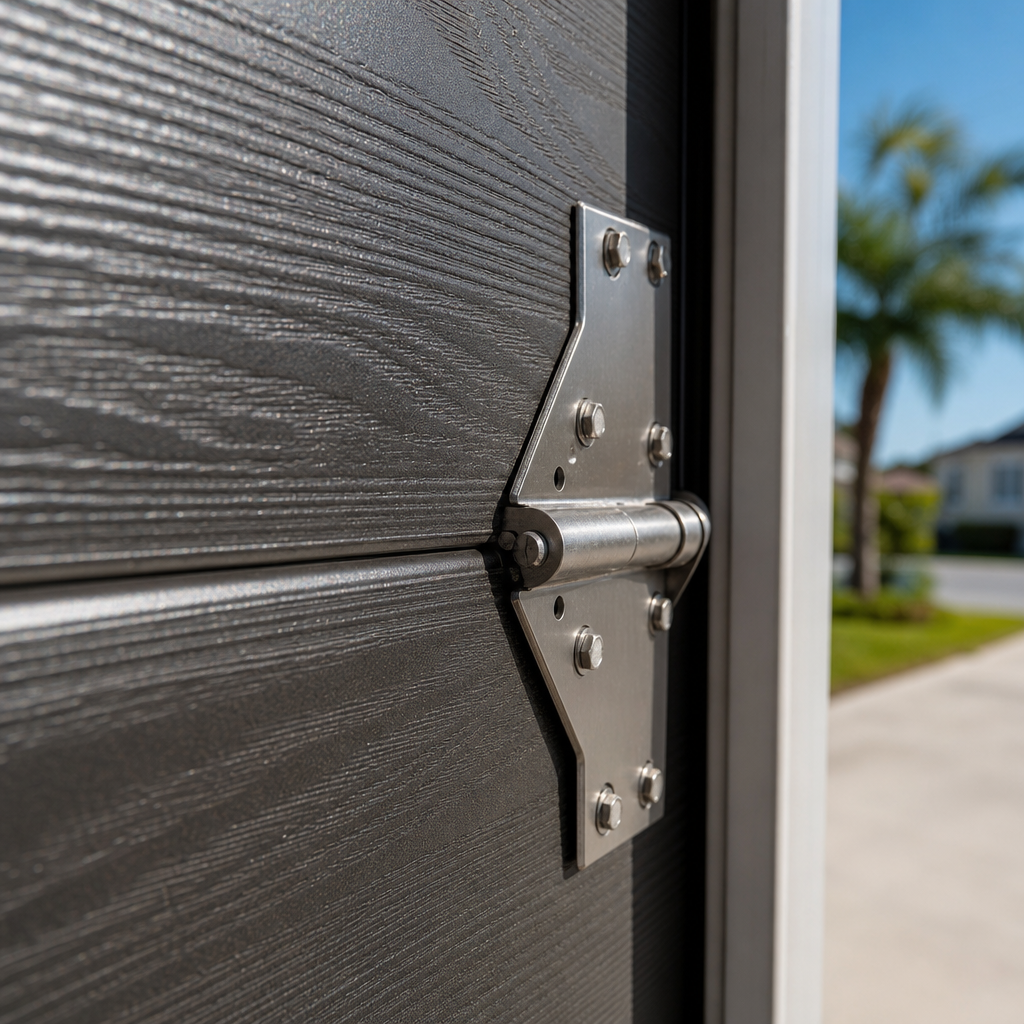
Standard manufacturer ratings for new garage doors fail in Southwest Florida because they do not account for the destructive combination of high-velocity coastal winds and corrosive salt air. While a basic steel door might last twenty years inland, that same material can rust, warp, or fail structurally within five years along the coast without localized, marine-grade upgrades.
The Impact of Salt-Laden Air on Hardware
Coastal humidity accelerates oxidation, turning standard zinc-plated hinges, rollers, and tracks into rusted liabilities. When comparing an aluminum vs steel garage door, aluminum resists rust but can corrode via salt-induced oxidation, making powder-coated or marine-grade aluminum suitable only for full-view oceanfront doors, while high-tensile steel remains necessary for structural wind-load demands on standard garages. To bridge this gap, high-performance installations from First Choice Garage Door Repair Cape Coral utilize multi-layer steel doors equipped with powder-coated, heavy-duty commercial hardware and coastal-grade track systems. This approach prevents the premature failure common with cheap, builder-grade parts.
For homeowners who want the warmth of natural timber without the moisture vulnerabilities, modern composite alternatives are shifting the market. Additionally, choosing the best garage door material requires looking at thermal protection. Polyurethane-filled steel or composite doors dominate the insulated garage door category, offering superior structural rigidity against storm pressures and excellent temperature control.[3]
Hurricane Wind-Load Requirements in Southwest Florida
In Lee County, meeting local building codes is a matter of home preservation. New garage doors must be engineered to withstand wind speeds ranging from 140 to 160 mph. Standard doors lack the internal U-bar reinforcement struts and heavy-gauge steel required to prevent a blowout during a hurricane. When a garage door fails under pressure, it can lead to the complete structural collapse of the home’s roof. Ensuring your installation features factory-certified, impact-rated designs protects your property and often lowers your home insurance premiums.
| Material Option | Salt-Air Corrosion Resistance | Wind-Load Structural Strength | Maintenance Requirements |
|---|---|---|---|
| Standard Builder-Grade Steel | Low (Prone to red rust) | Low (Requires manual reinforcement) | Moderate (Frequent painting needed) |
| Premium Insulated Steel (Polyurethane) | High (With marine-grade coatings) | Very High (Engineered wind-load) | Low (Occasional rinse) |
| Faux Wood Composite | Excellent (Will not rot or rust) | High (Reinforced steel core) | Very Low (No sealing required) |
| Natural Cedar Wood | Moderate (Susceptible to moisture) | Moderate (Heavy weight profile) | High (Annual sealing required) |
The financial impact of choosing the wrong material can be significant over time. While a high-end cedar wood door offers incredible beauty, the coastal maintenance is demanding, often requiring hundreds of dollars annually in professional refinishing and sealing to protect against moisture damage. Selecting a low-maintenance, hurricane-rated composite or insulated steel door avoids these recurring costs while securing your home against the elements.
What does a new garage door cost and how fast can it be installed?
Need garage door materials?
We’re available now — call for a fast, free estimate.
A new residential garage door typically costs between $1,200 and $4,000-plus installed, with standard installations completed in a single day. Your final investment depends on the wind-load rating and the specific types of garage door materials you select to withstand the Southwest Florida climate.
Average Cost Breakdowns by Material
When selecting the best garage door material for your budget and wind-code requirements, costs scale based on durability and corrosion resistance. Polystyrene-insulated doors represent a large share of the market, reflecting their popularity as a cost-effective thermal barrier. Aluminum and composite options represent a higher upfront investment but yield long-term savings through reduced maintenance and superior resistance to salt-air pitting.[4]
| Material Type | Average Price Range (Installed) | Local Climate Durability |
|---|---|---|
| Insulated Steel | $1,500 – $3,200 | Excellent (With hurricane-rated reinforcement) |
| Aluminum & Glass | $2,500 – $5,500 | Superior rust resistance for coastal zones |
| Composite Wood | $2,800 – $6,000 | High moisture resistance with natural aesthetics |
| Natural Wood | $4,500 – $9,000+ | Requires high maintenance against humidity |
The Professional Installation Timeline
To avoid the rapid degradation caused by coastal moisture and wind, professional installation is critical to protect your manufacturer warranty and ensure structural safety. A typical, professional installation follows a structured process to secure your home quickly:
- On-Site Evaluation: Technicians verify your opening dimensions and wind-load track requirements, providing a clear upfront estimate.
- Structural Tear-Down: The old door, rusted tracks, and fatigued springs are safely removed and hauled away.
- Precision Assembly: Installers mount heavy-duty, corrosion-resistant tracks and hang the new wind-rated panels.
- Spring and Opener Calibration: High-cycle torsion springs are tensioned to ensure perfect balance and smooth, quiet operation.
Frequently asked questions about residential garage door materials
Choosing the right garage door materials requires balancing local building codes, aesthetic preferences, and long-term performance. Steel garage doors offer an exceptional return on investment, making them a highly cost-effective choice for many homeowners. However, selecting the best option for your specific property involves understanding how these materials perform under local environmental pressures.[5]
What is the longest-lasting garage door material for coastal areas?
For coastal properties exposed to salt air, vinyl composite doors are highly resistant to salt, rust, and moisture with minimal maintenance, aligning with coastal expert recommendations. While fiberglass resists salt, it may be vulnerable to high wind loads in hurricane zones, making insulated galvanized steel a more reliable choice for standard garages.
Are wood garage doors practical for Florida’s humid climate?
Natural wood doors require intensive maintenance to prevent warping and rot in high humidity. For those who love the classic aesthetic, wood-composite materials or steel doors with faux-wood finishes offer the same visual appeal without the vulnerability to moisture, swelling, and pests.
How do I know if my new garage door meets local hurricane codes?
New garage doors installed in Southwest Florida must feature a certified wind-load rating to comply with the Florida Building Code. Homeowners should look for a manufacturer wind-load label on the inside of the door or consult with a licensed professional at First Choice Garage Door Repair Cape Coral to verify the design pressure (DP) rating required for their specific wind zone.
How does a professional installation ensure warranty protection?
Manufacturers of high-end garage doors often require professional installation to honor their structural and paint warranties. Licensed installers ensure that every track, spring, and wind-brace is calibrated to exact specifications, preventing the mechanical strain that can void your warranty and lead to premature hardware failure.
Need garage door materials?
We’re available now — call for a fast, free estimate.
Sources
- Garage and Overhead Doors Market Size & Share [2024-2032] – snsinsider.com (2032)
- North America Garage Overhead Doors Market Report – marketdataforecast.com (2033)
- Insulated Garage Door Market Research Report 2033 – marketintelo.com (2034)
- Door Insulation Market Size, Share & Industry Report 2034 – marketresearchfuture.com (2034)
- Garage Door Replacement ROI 2026: 268% Return on Investment – renovated.com (2026)
Related reading: How to Choose Garage Door Replacement Without Regret
Related reading: Garage Door Installation in Cape Coral Built to Outlast Salt Air and Storms
Related reading: Garage Door Warranty: How to Keep Coverage Valid in Coastal Florida
Frequently Asked Questions
How do I maintain a coastal-grade steel garage door to prevent rust over time?
To protect your investment from salt-air corrosion, wash the door exterior and hardware with mild soap and fresh water at least twice a year. Additionally, applying a thin layer of marine-grade lubricant to the hinges, rollers, and springs helps repel moisture. For professional maintenance and inspection, you can contact First Choice Garage Door Repair Cape Coral.
Will a wind-load certified garage door qualify me for homeowners insurance discounts?
Yes, installing a certified impact-resistant garage door that meets Florida Building Code wind-load requirements can significantly lower your windstorm insurance premiums. Insurance providers in Southwest Florida frequently offer discounts for homes with verified wind-mitigation features. First Choice Garage Door Repair Cape Coral can provide the necessary documentation and labels to help you secure these savings.
Can I reuse my existing garage door opener when upgrading to a heavier wind-rated steel door?
It depends on the horsepower rating and condition of your current opener, as hurricane-rated doors with internal reinforcement struts are significantly heavier. A professional technician must evaluate if your existing motor can safely handle the increased load without premature failure. Contact First Choice Garage Door Repair Cape Coral for a free, no-obligation estimate to determine if your current opener is compatible with your new door.
About the author
 |
David Mitchell David Mitchell is a seasoned home maintenance expert with over 15 years of experience in the garage door industry. Holding a degree in Mechanical Engineering from Florida Gulf Coast University, he specializes in writing about safety, mechanical troubleshooting, and emergency repair solutions for residential and commercial properties. David is passionate about helping Cape Coral residents secure their homes through reliable maintenance advice and clear, actionable insights. |